Crawl Space Insulation Vancouver WA for Cold Floors, Rodent Damage, and Aging Insulation
ABA HVAC & Crawlspace Solutions provides professional Crawl Space Insulation in Vancouver, WA for homeowners dealing with fallen insulation, missing coverage, rodent damage, moisture-affected material, or older insulation that is no longer performing as intended. Vancouver includes some of Southwest Washington’s oldest residential neighborhoods as well as newer development farther east, so the insulation beneath a home in Hough or Fourth Plain Village may have a very different history from material beneath a property near East Mill Plain or the 164th Avenue corridor. ABA starts with an inspection to determine what can remain, what needs replacement, and whether moisture, ductwork, or another crawlspace condition should be addressed first.
Crawlspace insulation is largely out of sight, which makes deterioration easy to miss.
Material can fall from its installed position, become damaged by rodents, or be affected by conditions beneath the home long before the homeowner sees it.
Replacement should still be based on condition—not simply on the age of the house.
Older Vancouver Homes May Have Several Generations of Insulation
In an established home, the insulation beneath the floor may be much newer than the building itself.
Previous owners may have added insulation, replaced sections, changed ductwork, or installed a vapor barrier at different times.
That history can produce a crawlspace containing a mixture of older and newer materials.
Vancouver neighborhoods make this especially relevant. Hough is one of the city’s oldest residential areas, while Fourth Plain Village includes many smaller vintage homes dating from the 1930s and 1940s along with older structures and later infill.
Age alone still does not tell ABA what needs replacement.
An inspection can look for:
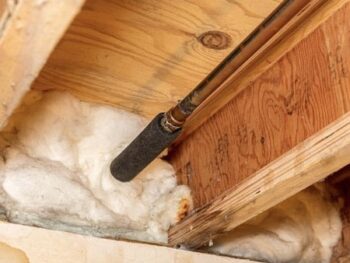
- Fallen or hanging insulation
- Significant gaps in coverage
- Missing sections
- Rodent-damaged material
- Moisture-affected insulation
- Poor previous installation
- Deteriorated materials
- Incomplete ground coverage
- Standing water
- Damaged flexible ductwork
- Other crawlspace conditions affecting the project
An older home may already have excellent replacement insulation.
A newer home can have rodent damage.
The material beneath the floor today matters more than the date on the property record.
Not Every Insulation Problem Requires Complete Removal
A crawlspace insulation project should be scaled to the condition found during inspection.
That can lead to several different approaches.
Serviceable Insulation May Be Able to Stay
Existing material that remains properly installed and suitable for continued use should not automatically be removed.
This is important when a problem affects only one section of the crawlspace.
Replacing useful insulation throughout the entire home can add work without addressing a real need.
Localized Damage Can Call for Targeted Correction
A limited rodent problem, previous repair, or isolated area of fallen insulation may affect only part of the installation.
ABA evaluates whether targeted removal and replacement makes sense while leaving unaffected material alone.
Widespread Deterioration May Justify a Larger Project
A more extensive replacement becomes appropriate when insulation is broadly damaged, falling throughout the crawlspace, significantly affected by moisture, extensively compromised by rodents, or poorly installed across large areas.
Removing compromised material can also expose areas that were previously difficult to inspect.
The important point is that the scope should grow because the findings justify it—not because every insulation appointment automatically becomes a full crawlspace restoration.
Rodent Activity Can Change the Insulation Plan
Rodents are particularly relevant to crawlspace insulation because they can affect more than one material beneath the home.
Insulation may be pulled down, disturbed, or otherwise damaged.
Flexible insulated ductwork can also be torn.
That means an inspection after rodent activity should look beyond the insulation itself.
Determine How Much Insulation Was Actually Affected
Rodent evidence in one corner of the crawlspace does not automatically mean every insulation section needs removal.
ABA evaluates how widespread the damage is.
When material remains serviceable outside the affected area, a more targeted approach may be possible.
Check Accessible Flexible Ductwork
A damaged duct creates a different problem.
Physical tears or disconnected sections cannot be corrected by replacing crawlspace insulation or cleaning the inside of the duct.
ABA can evaluate damaged ductwork separately for appropriate repair or replacement.
Consider Obvious Access Conditions
When visible breaches appear relevant to recurring animal activity, they should be considered as part of the broader crawlspace condition.
Replacing damaged insulation without considering an obvious source of repeated access can leave new material vulnerable to the same problem.
The objective is to reduce recurrence risk where practical rather than promise that rodents can never enter the crawlspace again.
Vancouver’s Wet Seasons Make Moisture Important Before Insulation Replacement
Insulation should not be expected to solve a moisture problem.
When existing material has been affected by damp conditions, the surrounding crawlspace deserves investigation before new insulation goes in.
Vancouver’s Pacific Northwest climate makes this particularly relevant during wet periods, but regional weather is not a reason to sell every homeowner the same moisture-control system.
ABA looks for actual evidence.
Inspect the Vapor Barrier and Exposed Soil
A vapor barrier provides ground coverage intended to limit moisture movement from exposed soil.
Existing barriers can become torn, displaced, deteriorated, or may have been installed poorly in the first place.
ABA has encountered previous vapor-barrier installations that leave unnecessary areas of soil exposed.
If the barrier needs correction, that work can be coordinated with the insulation project.
If it remains appropriately installed and serviceable, replacement should not be automatic.
Treat Standing Water as a Separate Problem
Standing water requires a different evaluation from ordinary ground moisture.
Installing a new vapor barrier does not necessarily stop water from accumulating beneath the home.
When actual water is present, ABA can evaluate whether drainage or another moisture-management approach needs consideration.
New insulation should not simply conceal an unresolved water condition that could affect the replacement material later.

Cold Floors Can Point Toward the Crawlspace, but the Diagnosis Matters
A cold floor can be one reason Vancouver homeowners start investigating crawlspace insulation.
If insulation is missing, fallen, or significantly deteriorated, unnecessary heat transfer through the floor assembly can contribute to comfort problems.
Correcting that deficiency can support more consistent indoor temperatures.
However, cold floors do not prove that crawlspace insulation is the only issue.
Comfort can also be affected by:
- Air leakage
- Damaged ductwork
- Attic insulation
- Windows and doors
- HVAC performance
- Building construction
- Uneven conditioned-air delivery
ABA can evaluate the insulation rather than simply adding more material based on the symptom.
For broader energy-loss concerns, FLIR thermal imaging can help identify potential problem areas associated with floors, walls, attics, windows, doors, and ductwork.
This whole-home perspective helps determine where corrective work is actually worthwhile.
Insulation and Ductwork Should Be Evaluated as Separate Components
Crawlspace ductwork and insulation are physically close to each other, but they perform different jobs.
This distinction becomes important when homeowners report weak airflow, uneven room temperatures, or comfort concerns alongside damaged insulation.
Insulation helps control heat transfer through the building assembly.
Ductwork distributes conditioned air.
A torn flexible duct can reduce air delivery even if the crawlspace insulation is excellent.
Missing insulation can contribute to heat transfer even when the ducts are intact.
When both problems exist, ABA can explain them separately.
This keeps an insulation project from being presented as a cure for physical duct damage and prevents a duct repair from being mistaken for an insulation solution.
Replacement Insulation Should Go Into a Crawlspace That Is Ready for It
When substantial replacement is justified, ABA looks at the sequence of the project.
Installing new material should come after relevant conditions have been understood.
A project may include:
Evaluating Existing Insulation: Determine what can remain and what is no longer suitable.
Removing Compromised Material: Take out insulation that is significantly damaged, deteriorated, moisture affected, or compromised by rodents.
Inspecting Newly Exposed Areas: Removal can reveal crawlspace conditions that were previously hidden.
Evaluating Moisture and Ground Coverage: Determine whether standing water or vapor-barrier deficiencies could affect the replacement.
Checking Accessible Ductwork: Identify physical duct damage when it is present.
Installing New Insulation: Add replacement material once the relevant crawlspace conditions have been addressed.
ABA works with fiberglass batt insulation for crawlspace applications and bases the installation on the needs of the property.
Not every home needs every stage.
The sequence should remain proportional to the project.
Poor Previous Insulation Work Can Be Corrected Instead of Repeated
Some crawlspace problems are not caused by the age of the insulation.
They result from how the material was installed.
ABA may find areas where insulation coverage is inconsistent, material was poorly positioned, or previous crawlspace work did not adequately account for surrounding conditions.
A replacement project provides an opportunity to improve that workmanship.
The same principle applies when other previous repairs are discovered.
If a vapor barrier leaves significant exposed soil, its condition can be evaluated.
If damaged flexible ductwork received only a temporary patch, a longer-term correction may make more sense.
The goal is not to replace everything another contractor touched.
It is to avoid reproducing a clearly inadequate solution.
Vancouver Homes Need Condition-Based Insulation Decisions
Housing around Hough, Arnada, Shumway, Fourth Plain Village, Bagley Downs, and other established parts of Vancouver reflects different periods of the city’s residential development.
Farther east, areas such as East Mill Plain and neighborhoods approaching the 164th Avenue corridor add more variety.
Those differences make standardized age-based insulation recommendations unreliable.
A vintage house can have recently upgraded insulation in excellent condition.
A later-built home can have sections damaged by rodents.
A remodeled property may contain insulation installed during several different projects.
ABA uses the home’s history as useful context while keeping the recommendation focused on the actual crawlspace.
That approach can help homeowners avoid unnecessary removal while making sure meaningful deficiencies are corrected.
Crawlspace Insulation Can Support Efficiency Without an Energy-Savings Guarantee
Properly installed crawlspace insulation can reduce unnecessary heat transfer through the floor assembly.
When insulation is missing or significantly compromised, correcting it can support indoor comfort and help the HVAC system maintain temperatures more efficiently.
However, one crawlspace project cannot guarantee a specific percentage reduction in energy bills.
Energy use also depends on:
- Attic insulation
- Wall assemblies
- Windows and doors
- Air leakage
- Duct condition
- HVAC equipment
- Thermostat settings
- Household habits
- Seasonal temperatures
ABA focuses on correcting identified deficiencies rather than attaching unrealistic savings promises to insulation replacement.
When several areas of the home may be contributing to energy loss, the inspection can expand beyond the crawlspace rather than assuming the floor assembly is responsible for everything.
Why Vancouver Homeowners Choose ABA for Crawl Space Insulation
ABA HVAC & Crawlspace Solutions was established in July 2020, while owner David Moshe has more than 15 years of industry experience involving crawlspaces, insulation, ductwork, and HVAC-related work.
David personally supervises ABA projects, providing direct oversight for work that is often difficult for homeowners to evaluate after installation.
ABA’s Vancouver crawlspace insulation approach emphasizes:
Inspection Before Replacement: Existing material is evaluated before determining how much needs removal.
Condition-Based Recommendations: Insulation is not automatically replaced because of its age or the age of the home.
Long-Term Correction: Moisture, rodent activity, vapor-barrier deficiencies, and damaged ductwork are considered when they affect the insulation project.
Whole-Home Thinking: Crawlspace insulation can be evaluated alongside attic conditions, ducts, airflow, and potential energy loss when appropriate.
Correction of Poor Previous Work: Deficient installations can be improved instead of simply duplicated.
Direct Owner Oversight: David personally supervises ABA projects.
Upfront Pricing: ABA emphasizes transparent pricing with no hidden fees.
Free Estimates: Vancouver homeowners can request an estimate based on the condition and scope of the crawlspace.
The purpose is to determine what the home actually needs beneath the floor and build the insulation project from those findings.
Get a Crawlspace Insulation Plan Built Around Your Vancouver Home
Older insulation is not automatically ineffective.
Fallen insulation should be evaluated before it is simply put back.
Rodent-damaged material may require targeted or extensive replacement depending on the condition.
And when moisture has affected insulation, the surrounding crawlspace should be investigated before new material is installed.
ABA HVAC & Crawlspace Solutions provides Crawl Space Insulation in Vancouver, WA with an inspection-driven approach that considers insulation condition, moisture, vapor barriers, standing water, rodent activity, ductwork, and potential energy loss when those factors are relevant.
Request a free estimate from ABA HVAC & Crawlspace Solutions to determine whether your Vancouver home needs targeted insulation correction, partial replacement, or a more comprehensive crawlspace insulation and restoration project.