Mold Remediation Vancouver WA for Attic and Crawlspace Moisture Problems
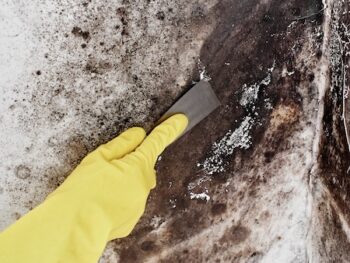
ABA HVAC & Crawlspace Solutions provides professional Mold Remediation in Vancouver, WA for homeowners dealing with visible mold-related growth, musty odors, moisture-affected insulation, or recurring conditions in attics and crawlspaces. Vancouver’s long wet season makes moisture management an important part of maintaining these hidden areas, while the city’s housing ranges from early 20th-century homes in Hough to 1930s and 1940s properties in Fourth Plain Village and later development throughout East Vancouver. ABA uses an inspection-driven approach that addresses affected areas while evaluating moisture, ventilation, insulation, and other conditions that may have contributed to the problem.
Treating visible growth is one part of remediation.
Understanding why the environment supported that growth is another.
For a crawlspace, the investigation may involve ground coverage or standing water. In an attic, ventilation and insulation can be important. Addressing relevant contributing conditions can reduce the risk of recurrence and create a more complete restoration.
Vancouver Homes Can Develop Mold-Related Problems for Different Reasons
Regional weather matters, but it does not explain every mold problem.
Two houses on the same Vancouver street can have completely different attic or crawlspace conditions.
One attic may have inadequate ventilation. Another may have no significant ventilation deficiency but a localized moisture source. One crawlspace may have exposed soil because of a poorly installed vapor barrier, while another has actual standing water.
ABA evaluates the property rather than assuming rainy weather is the complete explanation.
Depending on the location of the problem, an inspection may consider:
- Visible mold-related growth
- Musty or persistent odors
- Moisture-affected materials
- Damaged insulation
- Attic ventilation
- Soffit airflow where relevant
- Crawlspace vapor-barrier condition
- Exposed crawlspace soil
- Standing water
- Rodent-related damage
- Accessible ductwork
- Previous restoration or insulation work
The objective is to determine which conditions are actually connected to the project.
Crawlspace Mold Requires More Than Looking at the Floor Joists
A crawlspace can contain insulation, ductwork, a vapor barrier, exposed structural surfaces, and other materials within a relatively confined space.
When mold-related growth is discovered, those components provide useful context.
Start With the Moisture Conditions
ABA evaluates whether there is evidence of excessive moisture or water beneath the home.
The source and severity matter.
A crawlspace with a small area of concern and otherwise serviceable materials should not automatically receive the same recommendation as a crawlspace with standing water and widespread deteriorated insulation.
Inspect the Vapor Barrier
The vapor barrier is intended to provide appropriate ground coverage and limit moisture movement from exposed soil.
Older or poorly installed barriers may be torn, displaced, deteriorated, or incomplete.
ABA has encountered crawlspaces where previous vapor-barrier installations left significant soil exposed.
If the existing barrier is contributing to the moisture condition, correction may be appropriate.
If it remains properly installed and serviceable, there is no reason to replace it simply because mold remediation is occurring elsewhere.
Standing Water Changes the Crawlspace Remediation Plan
Standing water should be evaluated as its own problem.
A vapor barrier alone does not necessarily correct water that is actively accumulating beneath a house.
Likewise, treating visible mold without considering significant water accumulation can leave a major contributing condition unresolved.
When ABA finds standing water beneath a Vancouver home, the inspection can determine whether drainage or another moisture-management solution should be considered.
That evaluation is particularly important when damaged insulation will be replaced.
The sequence should make sense:
Remove compromised materials when necessary.
Perform the appropriate remediation.
Address relevant moisture conditions.
Then restore insulation or other materials.
Installing new materials while a significant water problem remains unresolved can expose them to the same environment that contributed to the original damage.
Attic Mold Can Point to a Ventilation Problem
Attic mold presents a different set of questions.
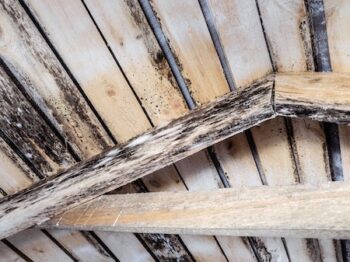
Because attics are rarely entered, a moisture or ventilation problem can remain unnoticed until a homeowner schedules insulation work, investigates an odor, or has another reason to inspect the space.
ABA evaluates both the affected surfaces and the surrounding attic conditions.
Ventilation Pathways Need to Function Properly
Attic ventilation helps manage moisture and heat.
In some configurations, insulation can interfere with intended soffit airflow when ventilation pathways have not been maintained correctly.
Where appropriate, ABA can use baffles to preserve those pathways.
Correcting a relevant ventilation deficiency can be an important part of reducing the risk that mold-related conditions will recur after remediation.
Insulation May Need to Be Removed Before Restoration
Insulation can also be affected by the same conditions that contributed to attic mold.
Material that is significantly compromised may need removal.
In other cases, insulation must be removed or moved to provide appropriate access to affected areas.
That does not mean every piece of insulation automatically needs replacement.
ABA evaluates how widespread the condition is and what can reasonably remain.
ABA Uses a Two-Step Mold Remediation Process
ABA provides mold-related services for attics and crawlspaces using a documented two-step remediation process.
The complete project depends on what the inspection reveals.
A remediation and restoration plan may include:
Inspection of the Affected Area: Identify visible conditions and evaluate relevant moisture, ventilation, insulation, or crawlspace factors.
Project Preparation: Determine which materials need removal or which areas require access before remediation.
Two-Step Remediation: Address affected surfaces using ABA’s remediation process.
Correction of Relevant Contributors: Where supported by the findings, address ventilation, vapor-barrier, standing-water, or other documented conditions.
Restoration: Install replacement insulation or complete other necessary restoration work after the space is ready.
No responsible remediation plan should promise that mold will never return.
Homes and environmental conditions change.
The practical objective is to address the existing problem and correct identifiable contributing conditions where possible to reduce recurrence risk.
Mold-Affected Insulation Does Not Automatically Mean Replacing Everything
Insulation replacement is often one of the largest parts of an attic or crawlspace restoration.
That makes it especially important to determine how much material actually needs to come out.
ABA bases the recommendation on condition.
Insulation may require removal when it is significantly compromised, when access is necessary for remediation, or when the surrounding conditions have substantially affected the material.
Serviceable insulation outside the affected area may be able to remain.
This is particularly useful in Vancouver’s established housing stock, where insulation may have been installed or replaced during several different renovations.
The age of the house does not establish the age or condition of the insulation.
Vancouver’s Older Neighborhoods Make Previous Work Worth Evaluating
Vancouver has a diverse residential history.
Hough is one of the city’s oldest neighborhoods and contains a large collection of pre-World War II housing. Fourth Plain Village includes many smaller vintage homes from the 1930s and 1940s, along with older structures and newer infill. Fruit Valley retains a substantial collection of World War II-era housing, while Bagley Downs combines single-family and multifamily properties.
These homes may have undergone decades of repairs and upgrades.
A previous owner could have replaced attic insulation, added a crawlspace vapor barrier, modified ductwork, or completed earlier moisture work.
Some of that work may still perform exactly as intended.
Other installations may have deteriorated or may never have addressed the underlying condition.
ABA evaluates previous work according to how it is functioning today.
An older installation is not automatically bad, and newer work is not automatically adequate.
Musty Odors Are a Reason to Investigate, Not a Diagnosis
A musty smell is one of the reasons homeowners begin looking for mold remediation.
The odor can be useful information, but it does not establish where mold is located or even confirm that mold is the source.
An inspection is more useful than guessing.
If the smell appears strongest near the crawlspace, ABA can evaluate moisture, standing water, insulation, vapor-barrier condition, rodent evidence, and visible mold-related conditions.
If the odor seems connected to the attic, ventilation and insulation may deserve attention.
If a smell appears to come through HVAC vents, the duct system and surrounding spaces may need investigation rather than automatically assuming mold is growing inside the ducts.
ABA’s experience across attics, crawlspaces, insulation, and ductwork helps when the source is not immediately obvious.
Recurring Mold Calls for Another Look at Contributing Conditions
Discovering mold-related growth in an area that has previously been treated does not automatically prove the earlier remediation failed.
The conditions around the space may have changed.
A new moisture source could develop.
A vapor barrier can deteriorate or move.
Water can begin accumulating where it did not before.
An attic ventilation deficiency may remain unresolved.
That is why recurring problems should prompt another investigation rather than repeated surface treatment without context.
ABA separates two important parts of the project:
Remediation addresses the existing affected area.
Corrective work addresses relevant conditions that may be contributing to the environment.
Connecting those parts can produce a more complete solution without automatically expanding every project into unnecessary reconstruction.
When Mold Remediation Becomes a Larger Crawlspace Restoration
A Vancouver homeowner may initially call about visible mold and discover several related crawlspace conditions.
For example, an inspection might reveal damaged insulation above an incomplete vapor barrier.
Another home might have standing water alongside moisture-affected materials.
Rodent activity can further complicate a crawlspace by damaging insulation and tearing flexible ductwork.
Depending on what is actually found, a broader restoration may involve:
- Removal of compromised insulation
- Crawlspace cleaning
- Two-step mold remediation
- Vapor-barrier correction
- Moisture-management or drainage work
- Replacement crawlspace insulation
- Evaluation of physically damaged flexible ductwork
- Correction of relevant crawlspace conditions before restoration
Each service should have a reason behind it.
Mold does not automatically mean the vapor barrier is bad.
Rodent evidence does not automatically mean every duct needs replacement.
Damaged insulation in one section does not necessarily require removal throughout the crawlspace.
ABA builds the project around the findings.
Attic Restoration Requires the Same Source-Focused Approach
More extensive attic mold projects can involve several steps as well.
When conditions justify it, ABA can coordinate removal of compromised insulation, remediation of affected areas, correction of relevant ventilation deficiencies, installation of baffles where appropriate, and replacement insulation.
The order matters.
Removing compromised material can improve access to the affected area.
Remediation addresses the existing condition.
Ventilation correction addresses a relevant contributor when one is present.
New insulation can then be installed after the attic is ready.
This sequence avoids simply hiding an unresolved attic problem beneath replacement material.
Vancouver’s Growth Adds New Homes Without Making Mold an Old-House-Only Problem
Vancouver’s housing continues to evolve.
The city has established neighborhoods near downtown and along the Fourth Plain corridor, while ongoing development and infill continue throughout the community, including areas around Mill Plain and farther east.
That variety reinforces an important point: mold-related problems should not be predicted from the age of the property.
An early 20th-century house may have a well-maintained attic and dry crawlspace.
A newer property can still experience a ventilation or moisture issue.
A remodeled home may contain materials and systems from several different periods.
Whether the property is around Hough, Arnada, Shumway, Fourth Plain Village, Bagley Downs, Vancouver Heights, East Mill Plain, or farther east toward the 164th and 192nd corridors, ABA bases remediation recommendations on the conditions present now.
Why Vancouver Homeowners Choose ABA for Mold Remediation
ABA HVAC & Crawlspace Solutions was established in July 2020, and owner David Moshe has more than 15 years of industry experience involving crawlspaces, attics, insulation, ductwork, and related restoration work.
David personally supervises ABA projects, providing hands-on oversight for work in areas homeowners may not be able to monitor easily themselves.
ABA’s approach to Vancouver mold remediation emphasizes:
Two-Step Remediation: ABA uses its documented two-step process for mold-related work.
Source-Focused Investigation: Relevant moisture and ventilation conditions are considered alongside visible growth.
Long-Term Corrective Solutions: The goal is to address contributing conditions where they can reasonably be corrected instead of relying on temporary surface treatment.
Attic and Crawlspace Expertise: ABA can evaluate insulation, ventilation, vapor barriers, standing water, and accessible ductwork when those components relate to the project.
Condition-Based Replacement: Insulation and other materials are removed according to actual condition rather than automatically.
Whole-Space Thinking: Remediation and restoration are coordinated when several related conditions are present.
Direct Owner Oversight: David personally supervises ABA projects.
Upfront Pricing: ABA emphasizes transparent pricing with no hidden fees.
Free Estimates: Vancouver homeowners can request an estimate based on the actual remediation and restoration scope.
The objective is to explain what needs treatment, what contributed to the problem, and which corrective steps make sense for that particular home.
Address the Affected Area and the Conditions That Allowed It to Develop
Mold remediation is more useful when the project answers two questions: what needs treatment now, and what relevant conditions should be corrected before restoration is complete?
For a Vancouver crawlspace, that can mean evaluating ground coverage, standing water, insulation, and other moisture conditions.
For an attic, ventilation and compromised insulation may be part of the investigation.
ABA HVAC & Crawlspace Solutions provides Mold Remediation in Vancouver, WA using a two-step remediation process and an inspection-driven approach focused on long-term corrective work rather than shortcuts.
Request a free estimate from ABA HVAC & Crawlspace Solutions to have your Vancouver attic or crawlspace evaluated and develop a mold remediation plan based on the conditions actually found in your home.