Mold Remediation Battle Ground WA for Attics, Crawlspaces, and Moisture-Related Growth
ABA HVAC & Crawlspace Solutions provides professional Mold Remediation in Battle Ground, WA for homeowners who discover visible growth, musty odors, moisture-related problems, or mold-affected materials in attics and crawlspaces. Battle Ground’s Pacific Northwest climate brings long periods of wet weather, while homes throughout Battle Ground West, Scotton Corner, Pleasant Valley, King Corner, and surrounding residential areas can have very different ventilation, insulation, and moisture histories. ABA takes a source-focused approach: address the affected area, evaluate why moisture or ventilation conditions allowed the problem to develop, and recommend corrective work that can reduce the risk of recurrence.
Finding mold can be concerning, but the presence of visible growth does not tell you everything about the underlying problem.
The more useful questions are where moisture is coming from, whether ventilation is contributing, which materials have been affected, and what needs to change before the area is restored.
Mold Remediation Should Address More Than What You Can See
Surface treatment alone may leave the conditions that contributed to the problem unchanged.
That is particularly important in attics and crawlspaces because these spaces contain several interconnected components.
An inspection may need to consider:
- Visible mold or mildew growth
- Musty or unusual odors
- Moisture-affected insulation
- Attic ventilation
- Crawlspace ground coverage
- Vapor-barrier condition
- Standing water
- Evidence of leaks or excess dampness
- Rodent-damaged materials
- Ductwork condition
- Areas where previous remediation may not have addressed the contributing conditions
ABA focuses on the actual findings rather than assuming every mold-related project requires the same package of services.
The objective is to develop a remediation plan for the affected area while identifying relevant moisture or ventilation conditions that could otherwise allow the problem to return.
Battle Ground’s Wet Climate Makes Moisture Control Part of the Conversation
Mold needs favorable environmental conditions to grow, and moisture is one of the most important factors to investigate.
Battle Ground’s wet Pacific Northwest climate makes moisture management especially relevant in enclosed spaces beneath and above the living area.
Regional weather alone, however, does not diagnose the source of a particular mold problem.
A crawlspace could have inadequate ground coverage.
Another could have standing water.
An attic could have insufficient ventilation.
A localized problem could be associated with a specific moisture source.
Those situations require different corrective strategies.
ABA evaluates the surrounding conditions rather than treating Battle Ground’s climate as an explanation for everything.
Crawlspace Mold Can Be Connected to Several Moisture Conditions
Crawlspaces are one of the areas where homeowners may discover mold-related conditions because they are enclosed, rarely visited, and located directly above the ground.
If mold is found beneath a Battle Ground home, the inspection should consider what is happening around it.
Incomplete or Deteriorated Vapor Barriers
A properly installed vapor barrier provides ground coverage intended to limit moisture movement from exposed soil.
ABA has encountered previous installations where substantial areas remained exposed or the barrier had deteriorated.
If ground coverage is contributing to the moisture condition, correcting the vapor barrier can become part of the long-term plan.
An existing barrier that remains serviceable does not automatically need replacement.
Standing Water
Standing water is different from ordinary ground moisture.
If water is accumulating beneath the home, simply treating visible mold and installing new insulation may leave an important contributing condition unresolved.
ABA can evaluate whether drainage or another moisture-management solution should be considered based on what is actually found.
Damaged Insulation
Insulation can also be affected during a crawlspace moisture or mold project.
Material that is significantly compromised may require removal and replacement.
Serviceable insulation elsewhere should not automatically be discarded merely because mold was found in another part of the crawlspace.
Attic Mold Often Requires a Look at Ventilation and Insulation
Attics create a different set of conditions.
When mold-related growth is discovered there, ABA considers more than the visible surface.
Ventilation and insulation deserve attention because both influence attic conditions.
For example, insulation can interfere with soffit ventilation when airflow pathways are not properly maintained.
Where appropriate, ventilation correction may include installing baffles to preserve airflow from soffit areas.
Damaged or contaminated insulation may also need removal before the attic is restored.
ABA has worked on projects where an initial home-service concern led to the discovery of widespread attic mold associated with inadequate ventilation. In that type of situation, a more complete solution can involve removing compromised insulation, performing remediation, correcting ventilation deficiencies, and installing replacement insulation.
The important part is the sequence.
New insulation should not simply cover an unresolved attic condition.
ABA Uses a Two-Step Approach to Mold Remediation
ABA’s documented approach to attic and crawlspace mold-related work includes a two-step remediation process.
The specific scope depends on the location and extent of the affected area, as well as the surrounding conditions found during inspection.
The broader process may involve:
Inspecting the Area: Determine where visible growth is present and evaluate relevant moisture, ventilation, insulation, or crawlspace conditions.
Preparing the Project: Identify materials that need removal or protection before treatment.
Performing the Remediation Process: Address affected areas using ABA’s remediation approach.
Correcting Relevant Contributors: When supported by the inspection, this may involve ventilation correction, vapor-barrier work, moisture management, or removal of damaged insulation.
Restoring Necessary Materials: Replace insulation or other documented components when their condition justifies replacement.
Mold remediation should not come with a promise that mold will never appear again.
Buildings and environmental conditions change.
Addressing contributing moisture and ventilation issues can, however, reduce the risk of recurrence and create a more complete long-term solution than treating visible growth alone.
Musty Odors Are a Reason to Inspect, Not a Mold Diagnosis
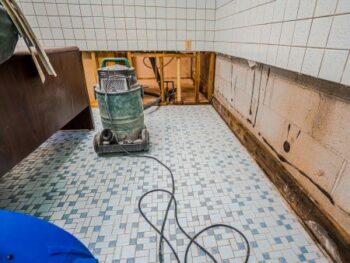
A musty odor can prompt homeowners to search for mold remediation, particularly when the smell seems to originate from a crawlspace or attic.
Odor alone does not establish exactly what is present.
The better next step is to inspect accessible areas and look for evidence.
Similarly, an unusual odor coming from HVAC vents may justify investigating ductwork and surrounding areas rather than immediately assuming mold is inside the duct system.
ABA’s broader experience with crawlspaces, attics, insulation, and ductwork is useful when the location of a problem is uncertain.
The inspection can help separate visible mold-related conditions from other issues such as moisture, damaged insulation, rodent activity, or duct problems.
Mold-Affected Insulation Should Be Evaluated Before Replacement
Insulation and remediation frequently overlap in attics and crawlspaces.
When insulation has been significantly affected, removal may be necessary to access the area or because the material is no longer appropriate to leave in place.
That does not mean all insulation in the home needs replacement.
ABA evaluates the condition and extent.
A localized crawlspace problem may require work in only one section.
Widespread attic conditions may justify a much larger insulation project.
When replacement is necessary, the timing matters.
Relevant moisture or ventilation problems should be considered before new insulation is installed so the restoration does not simply recreate the conditions that affected the previous material.
Previous Mold Work May Have Addressed the Symptom but Not the Source
Homeowners sometimes discover mold in an area that has apparently been treated before.
That does not automatically mean the previous contractor performed the work incorrectly.
Conditions may have changed since the earlier remediation.
But recurring growth does make the surrounding environment worth investigating.
ABA looks beyond the visible surface to relevant contributing conditions.
In a crawlspace, that might mean evaluating exposed soil, a deteriorated vapor barrier, or standing water.
In an attic, ventilation deficiencies may deserve attention.
The principle is simple: remediation addresses the affected area, while corrective work addresses relevant conditions that may have contributed to the problem.
Keeping those two objectives connected can produce a more durable project.
Battle Ground Homes Can Have Very Different Moisture and Ventilation Histories
Battle Ground continues to include both established residential neighborhoods and newer development and infill.
That housing variety matters for mold remediation because the age of a home does not reliably tell you the condition of its attic or crawlspace.
An older home may have received excellent insulation and ventilation upgrades.
Another may contain several generations of previous work.
A newer property can still experience a moisture or ventilation problem.
Homes around Battle Ground West, Scotton Corner, Pleasant Valley, King Corner, McConnell Park, West Main Street/SR 502, and the SR 503 corridor should therefore be evaluated according to their actual conditions.
ABA does not assume that older homes have mold or that newer homes are immune to it.
Inspection provides the information needed to build the remediation scope.
When Mold Remediation Becomes a Larger Attic or Crawlspace Restoration
Some mold-related projects are relatively focused.
Others reveal damaged materials or contributing conditions that require a broader restoration.
Depending on what is found, related work can include:
- Removal of compromised insulation
- Replacement insulation
- Crawlspace cleanup
- Vapor-barrier correction or replacement
- Moisture-management work
- Attic ventilation correction
- Installation of baffles where appropriate
- Evaluation of damaged accessible ductwork
- Restoration of affected attic or crawlspace areas
Every additional service should solve an identifiable problem.
Visible mold in one attic section does not automatically mean a homeowner needs complete crawlspace work.
Likewise, crawlspace mold does not automatically mean every duct or piece of insulation needs replacement.
ABA’s inspection-driven approach keeps the project connected to the findings.
Why Battle Ground Homeowners Choose ABA for Mold Remediation
ABA HVAC & Crawlspace Solutions is based in Battle Ground and was established in July 2020. Owner David Moshe brings more than 15 years of industry experience involving crawlspaces, attics, insulation, ductwork, and related restoration work.
David personally supervises ABA projects, providing hands-on oversight throughout work in areas of the home that homeowners often cannot easily monitor themselves.
For mold-related projects, ABA emphasizes:
Source-Focused Evaluation: The visible growth is considered alongside relevant moisture and ventilation conditions.
Two-Step Remediation: ABA uses its documented two-step process for mold-related remediation work.
Long-Term Corrective Thinking: The goal is not simply to cover or temporarily treat a problem while ignoring contributing conditions.
Attic and Crawlspace Experience: ABA can evaluate insulation, ventilation, vapor barriers, moisture, and accessible ductwork when those components are relevant.
Condition-Based Restoration: Materials are replaced according to their condition rather than automatically removing everything in the space.
Direct Owner Oversight: David personally supervises ABA projects.
Upfront Pricing: ABA emphasizes transparent pricing with no hidden fees.
Free Estimates: Battle Ground homeowners can request an estimate based on the actual remediation and restoration scope.
ABA’s approach is designed to help homeowners understand both what needs remediation and what surrounding conditions deserve correction.
Address the Mold and the Conditions Around It
Visible mold is only one part of the information needed to plan remediation.
A crawlspace may also have inadequate ground coverage or standing water.
An attic may have ventilation deficiencies or compromised insulation.
And a recurring problem deserves an investigation into why conditions continue to support growth.
ABA HVAC & Crawlspace Solutions provides Mold Remediation in Battle Ground, WA with a two-step remediation process and an inspection-driven approach focused on the affected area as well as relevant moisture, ventilation, insulation, and crawlspace conditions.
Request a free estimate from ABA HVAC & Crawlspace Solutions to have your Battle Ground attic or crawlspace evaluated and develop a remediation plan based on what is actually happening in your home.