Mold Remediation Lacey WA for Attic and Crawlspace Moisture Problems
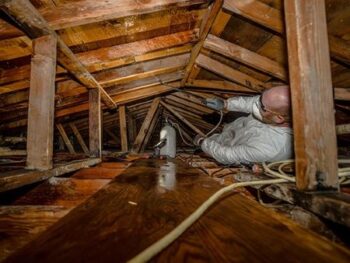
ABA HVAC & Crawlspace Solutions provides professional Mold Remediation in Lacey, WA for homeowners who discover visible growth, musty odors, moisture-affected insulation, or mold-related conditions in attics and crawlspaces. Lacey’s South Puget Sound setting brings long stretches of wet weather, while homes around College Street, Long Lake, Pleasant Glade, Hawks Prairie, and other parts of the city can have very different ventilation, insulation, and moisture histories. ABA’s approach goes beyond treating what is visible by evaluating the conditions that contributed to the problem and identifying practical corrections that can reduce the risk of recurrence.
Mold-related problems are often discovered in spaces homeowners rarely enter.
An attic problem might remain unnoticed until insulation work or another inspection takes place. A crawlspace problem may first become apparent because of a musty odor, standing water, damaged insulation, or another maintenance concern.
In either situation, remediation is more useful when the affected area and its surrounding environment are considered together.
Finding Mold Is the Beginning of the Investigation
Visible growth tells you that an area deserves attention.
It does not automatically tell you why the condition developed or how extensive the corrective work should become.
ABA evaluates relevant factors such as:
- Location and extent of visible growth
- Musty or unusual odors
- Moisture-affected insulation
- Attic ventilation conditions
- Crawlspace vapor-barrier condition
- Exposed crawlspace soil
- Standing water
- Other visible moisture conditions
- Rodent-damaged materials
- Accessible ductwork when relevant
- Previous insulation or remediation work
This inspection-driven process is important because two Lacey homes with similar-looking mold can require very different projects.
One may have an attic ventilation problem.
Another may have crawlspace moisture associated with poor ground coverage.
A third may have a localized issue that does not justify extensive restoration.
Attic Mold Calls for a Closer Look at Ventilation
Attic mold remediation should not stop with the visible surface when ventilation conditions may be contributing to the problem.
Attics need appropriate airflow to manage moisture.
When those pathways are restricted or ventilation is otherwise inadequate, conditions can develop that deserve correction alongside remediation.
Insulation Can Affect Ventilation
Attic insulation and ventilation work together but serve different purposes.
In some attic configurations, insulation installed too close to soffit areas can interfere with intended airflow.
Where appropriate, ABA can install baffles to preserve ventilation pathways from the soffits while allowing insulation to remain where it belongs.
If ventilation deficiencies contributed to mold-related conditions, correcting those deficiencies can become an important part of the restoration plan.
Damaged Insulation May Need Removal
Attic insulation should be evaluated according to its condition.
Material that is significantly compromised may need to be removed as part of remediation and restoration.
That does not mean every mold finding requires complete attic insulation replacement.
The extent of affected material should guide the scope.
When replacement is necessary, ABA can coordinate remediation, relevant ventilation corrections, and new insulation so the attic is restored in a logical sequence.
Crawlspace Mold Requires a Different Moisture Investigation
The conditions beneath a Lacey home are different from those in an attic.
Crawlspaces are influenced by the ground below them, exterior drainage, vapor-barrier condition, ventilation, and other moisture sources.
When mold-related growth is discovered there, ABA looks for conditions that could be supporting excess moisture rather than assuming treatment alone will solve the problem.
Ground Coverage Matters
A crawlspace vapor barrier is intended to provide appropriate ground coverage and limit moisture movement from exposed soil.
Over time, a barrier may tear, move out of position, deteriorate, or prove inadequate because of poor previous installation.
ABA has encountered crawlspaces where earlier vapor-barrier work left substantial soil exposed.
When that condition is relevant to the moisture problem, correcting the ground coverage can become part of the project.
If the existing barrier remains appropriately installed and serviceable, however, mold remediation does not automatically require replacing it.
Standing Water Needs More Than Surface Treatment
Actual water accumulating beneath a home requires separate attention.
A new vapor barrier does not necessarily correct the reason water is collecting in the crawlspace.
If standing water is present, ABA can evaluate whether drainage or another moisture-management solution is appropriate before the restoration is completed.
Treating visible mold while leaving significant water accumulation unresolved would address only part of the problem.
ABA Uses a Two-Step Mold Remediation Process
ABA performs mold-related work in attics and crawlspaces using a two-step remediation process.
The complete project scope depends on where the affected area is located, how extensive it is, and what surrounding conditions are discovered.
A mold remediation project may involve:
Inspection: Evaluate the visible condition and relevant attic or crawlspace environment.
Preparation: Determine which affected materials require removal or protection before remediation begins.
Remediation: Perform ABA’s two-step treatment process on the affected areas.
Contributing-Condition Correction: Address relevant moisture or ventilation deficiencies when supported by the inspection.
Restoration: Replace insulation or other documented materials when their condition requires it.
This sequence is designed around long-term correction rather than simply making visible growth disappear.
No responsible remediation process can guarantee that mold will never develop again.
Moisture conditions, building materials, ventilation, leaks, and other factors can change over time.
Correcting identifiable contributors can reduce recurrence risk.
Musty Odors Deserve Investigation Without Jumping to Conclusions
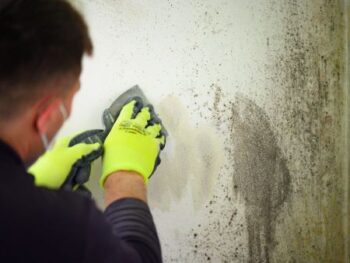
A persistent musty smell is one reason homeowners contact mold-remediation companies.
It is not a diagnosis by itself.
If the odor appears stronger near an attic access, crawlspace, or another part of the home, inspecting that area can help determine what is actually present.
The same principle applies when an unusual smell seems to come from HVAC vents.
It may be tempting to conclude that mold is inside the duct system, but the source could be elsewhere.
ABA’s experience with attics, crawlspaces, insulation, and ductwork makes it possible to consider related areas when the source is unclear.
The goal is to locate evidence before recommending remediation.
Mold and Insulation Problems Often Need to Be Sequenced Carefully
Insulation can become part of a mold remediation project for several reasons.
It may be significantly affected by the surrounding conditions.
It may need removal to provide access to the area requiring treatment.
Or it may have deteriorated because the same moisture problem contributed to both conditions.
The sequence matters.
Removing compromised insulation first can provide better access for remediation and inspection.
Relevant moisture or ventilation conditions can then be addressed.
Replacement insulation can be installed after the space is ready.
Installing new insulation before addressing an important contributing condition can leave the new material exposed to the same environment.
ABA provides both attic and crawlspace insulation services, allowing restoration work to be coordinated when replacement is actually necessary.
Lacey’s Wet Seasons Make Source-Focused Remediation Especially Useful
Pacific Northwest rainfall makes moisture management an important consideration, but weather should not become a catch-all explanation for every mold problem.
Homes around Long Lake can have different site and crawlspace conditions from properties around College Street.
Hawks Prairie includes significant residential development, while established areas around Pleasant Glade and central Lacey have homes with different construction and renovation histories.
The city also continues to see residential development around areas such as Long Lake and Hawks Prairie.
That variety matters.
An established house may have undergone several attic insulation or ventilation modifications.
A newer home can still develop a localized moisture problem.
A remodeled property may contain materials installed during different projects.
ABA evaluates the current condition instead of assuming that mold is an old-home problem or that newer construction cannot experience it.
Previous Remediation Does Not Always Explain Why a Problem Returned
Finding mold-related growth in an area that has been treated previously can be frustrating.
Recurring growth does not automatically prove that the earlier remediation was performed incorrectly.
A leak could have developed later.
Ventilation conditions may have changed.
A crawlspace vapor barrier could have deteriorated.
Standing water could have appeared after drainage conditions changed.
What recurrence does indicate is that the environment deserves another careful evaluation.
ABA’s approach separates two parts of the project:
Remediation addresses the affected area.
Corrective work addresses relevant conditions that may have contributed to the problem.
Both can be important, but the second should be based on evidence rather than automatically adding services.
When Mold Remediation Becomes an Attic or Crawlspace Restoration
A limited mold-related condition may require a relatively focused project.
More extensive problems can involve several materials or systems.
Depending on the findings, a Lacey remediation project may also require:
- Removal of compromised insulation
- New attic or crawlspace insulation
- Crawlspace cleaning
- Vapor-barrier correction
- Moisture-management work
- Attic ventilation improvements
- Baffles where appropriate for soffit airflow
- Evaluation of physically damaged accessible ductwork
- Broader attic or crawlspace restoration
The presence of mold does not automatically justify everything on that list.
Each service should have a specific reason.
For example, a crawlspace vapor barrier should be corrected because its condition warrants correction—not simply because mold exists somewhere under the house.
The same applies to insulation.
Serviceable material outside the affected area should not automatically be discarded.
Rodent Damage Can Complicate Crawlspace Remediation
Rodents and mold are separate problems, but they can overlap in neglected crawlspaces.
Rodent activity can disturb insulation and physically damage flexible ductwork.
Moisture can simultaneously affect other materials.
When these conditions appear together, simply treating visible mold may leave a substantial portion of the crawlspace problem unresolved.
ABA can evaluate the affected insulation, accessible ducts, vapor barrier, and moisture conditions while developing the restoration scope.
This whole-space approach does not mean automatically replacing everything.
It means identifying which materials have actually been compromised and putting the work in the right order.
Why Lacey Homeowners Choose ABA for Mold Remediation
ABA HVAC & Crawlspace Solutions was established in July 2020, and owner David Moshe has more than 15 years of industry experience involving attics, crawlspaces, insulation, ductwork, and restoration-related work.
David personally supervises ABA projects, providing direct oversight throughout work in spaces homeowners may find difficult to inspect themselves.
ABA’s approach to mold remediation emphasizes:
Source-Focused Investigation: The team considers relevant moisture and ventilation conditions along with visible growth.
Two-Step Remediation: ABA uses its documented two-step process for mold-related treatment.
Long-Term Correction: Relevant contributing conditions are addressed when they are identified rather than relying only on surface-level treatment.
Attic and Crawlspace Expertise: Insulation, ventilation, vapor barriers, moisture, and accessible ductwork can be evaluated when they relate to the project.
Condition-Based Restoration: Replacement recommendations are tied to actual material condition.
Direct Owner Oversight: David personally supervises ABA projects.
Upfront Pricing: ABA emphasizes transparent pricing with no hidden fees.
Free Estimates: Lacey homeowners can request an estimate based on the actual remediation and restoration scope.
The result is a remediation plan built around what is happening in the home rather than a generic package.
Build Your Lacey Mold Remediation Plan Around the Source
Visible mold needs treatment, but a complete plan should also ask why the conditions developed.
In an attic, ventilation and insulation may be relevant.
In a crawlspace, ground coverage, standing water, insulation, or another moisture condition may deserve attention.
And when materials need replacement, the underlying environment should be evaluated before new materials go in.
ABA HVAC & Crawlspace Solutions provides Mold Remediation in Lacey, WA using a two-step remediation process and an inspection-driven approach to relevant moisture, ventilation, insulation, attic, and crawlspace conditions.
Request a free estimate from ABA HVAC & Crawlspace Solutions to have your Lacey attic or crawlspace evaluated and develop a mold remediation plan based on the conditions actually found in your home.
Mold Remediation FAQs for Lacey, Washington